A micro-gig platform connecting local business owners with college students for short tasks.
Introduction
I came to Delhi for college and like most of my friends, wanted to earn money without asking parents every time. When a startup competition reminder showed up 3 days before the deadline, I decided this was my chance. The problem I knew best - how do college students earn safely and simply - became DSEN. A platform connecting Delhi college students with local businesses for micro gigs. Built the first working prototype in 3 days.
Problem
College students have time and a strong desire to earn, but they struggle to get their first paid work because most platforms favor experienced freelancers with portfolios.
Local small businesses regularly need tiny, one-off tasks but cannot justify hiring full-time staff or paying agency rates. As a result, businesses stay understaffed while students remain locked out of earning and real-world experience - even though their skills are a perfect match for these micro-tasks.
Users
DSEN serves two very different users - a digitally aware college student and a Gen X local business owner. The product had to work simply for both.
Age 18–23 · College Student · Delhi NCR
Comfortable with AI tools, creativity apps, cameras, and Google services. Skilled but lacks a portfolio and real work experience. Freelancing platforms today demand both before giving anyone a chance.
General stores · Bakeries · Barber shops · Local kitchens
Needs small digital tasks done - Google Maps listing, online menu, banners. Can't afford agencies. Gets it done once but can't continue because the cost doesn't justify the task. Already under pressure from quick commerce.
Solution
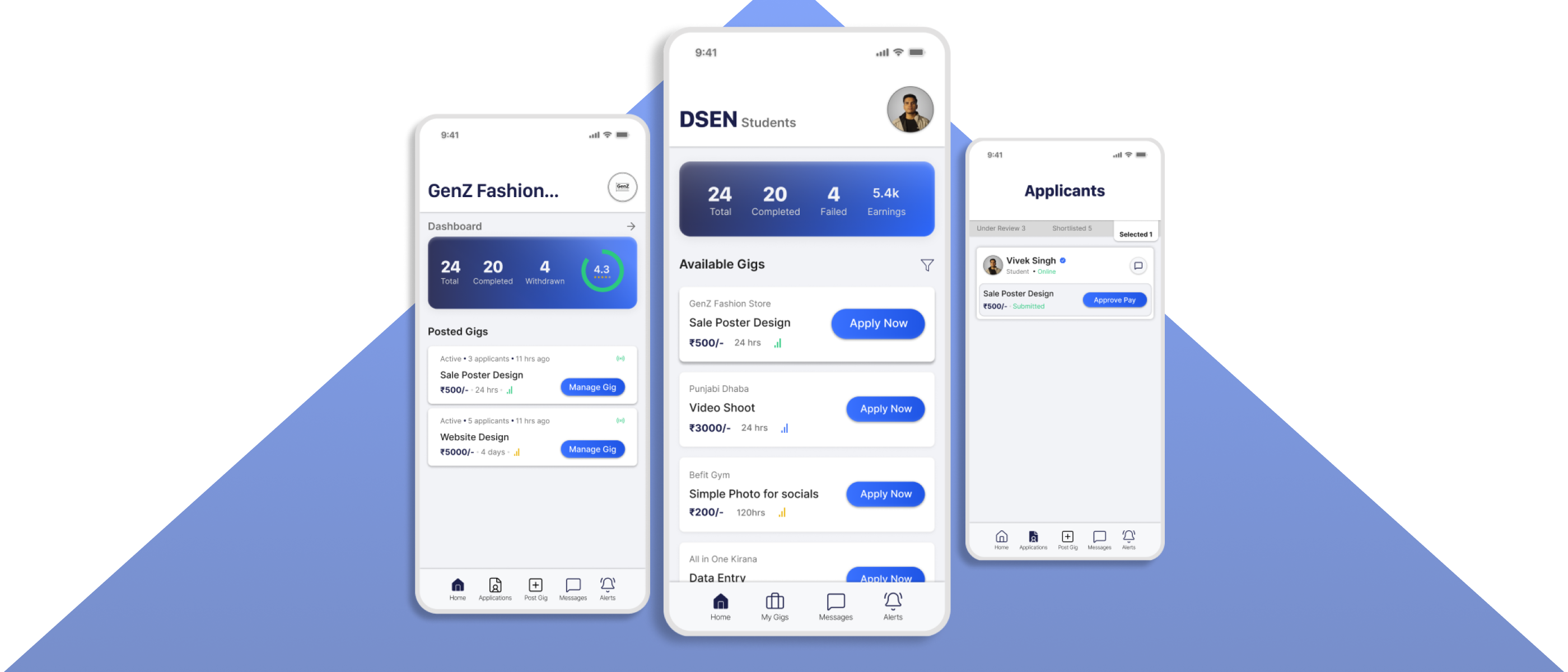
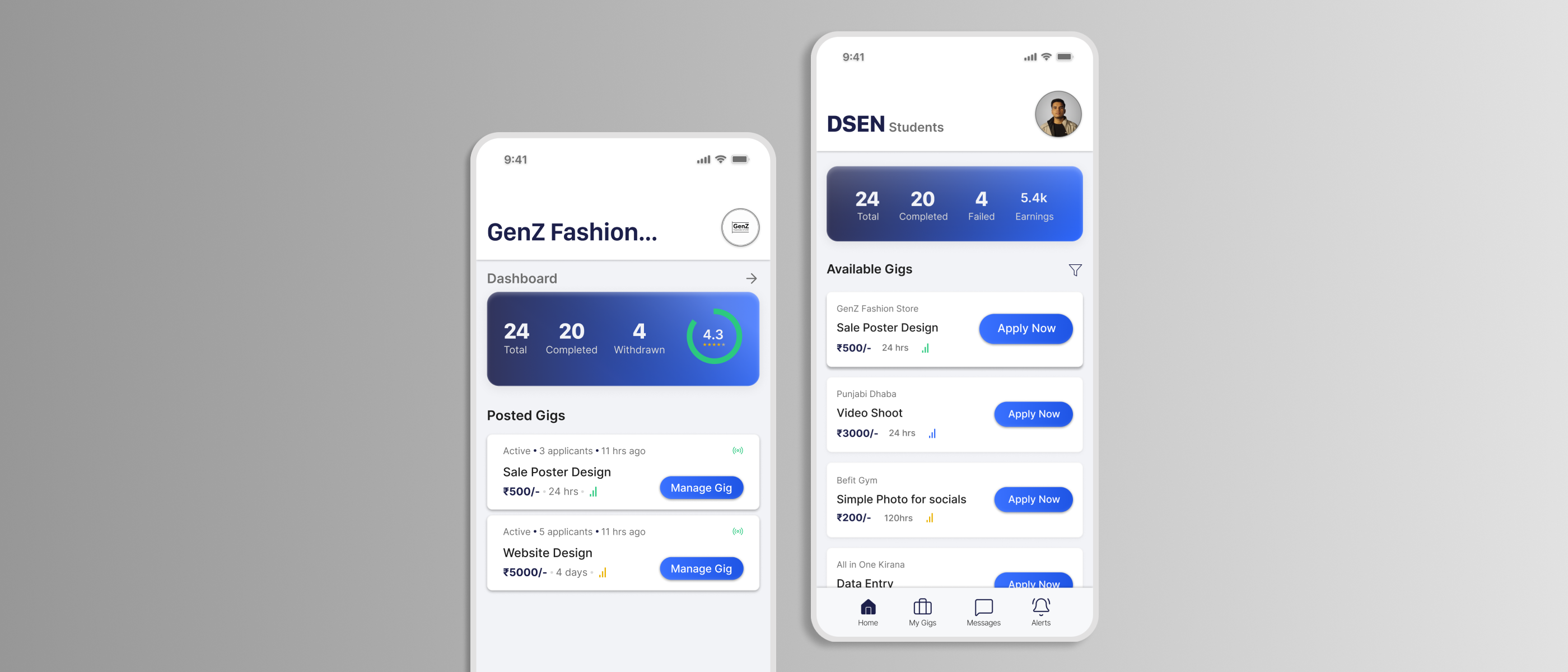
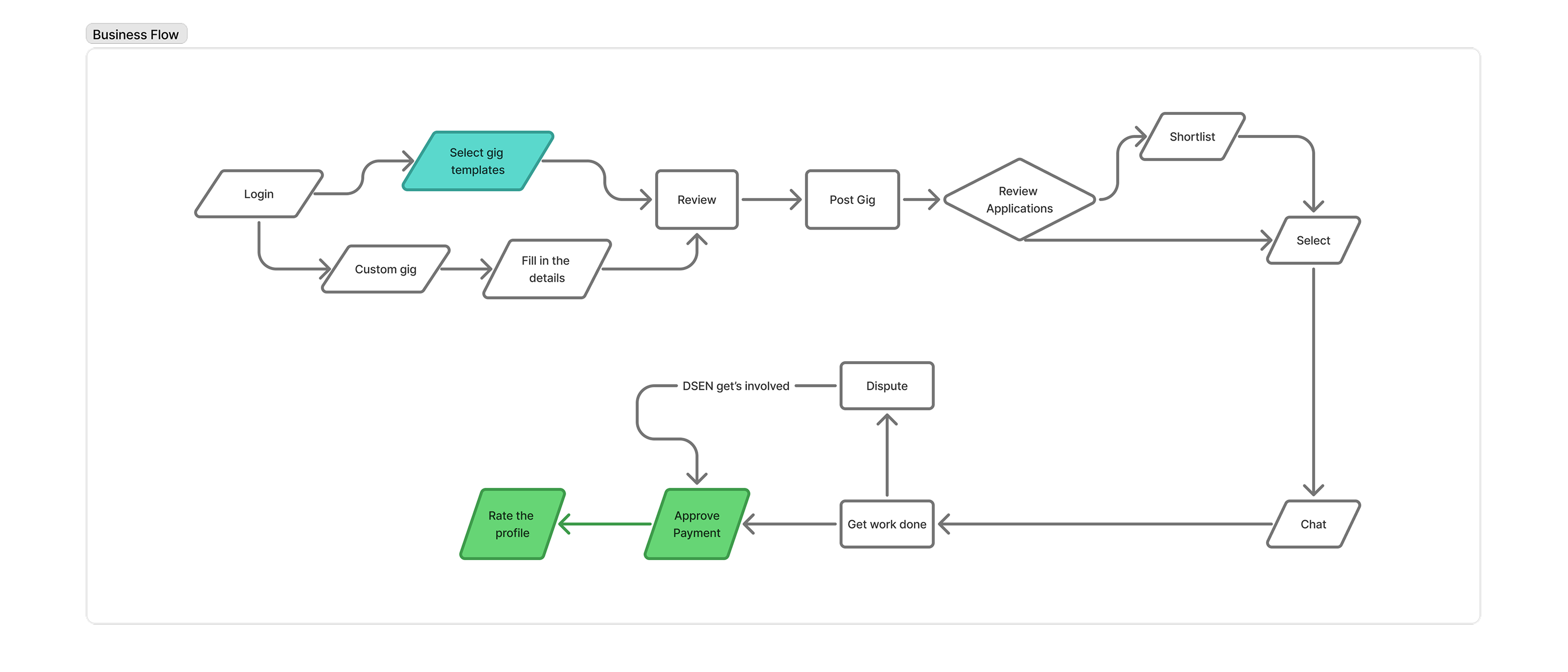
DSEN connects verified students and local businesses. Businesses post micro gigs - either from ready-made templates or custom - students apply, and the selected one gets it done for a set amount. No negotiation, no variable pricing, no confusion.
The app has a three tier level system (Beginner, Intermediate, Advanced). Gigs are shown based on the level a student selects - so a first year student with basic Canva skills and a final year developer are never competing on the same playing field. The experience is simple on the surface because the complexity sits entirely on the builder's side - me.
Design Decisions
Every decision was made to reduce friction for one side without adding it to the other.
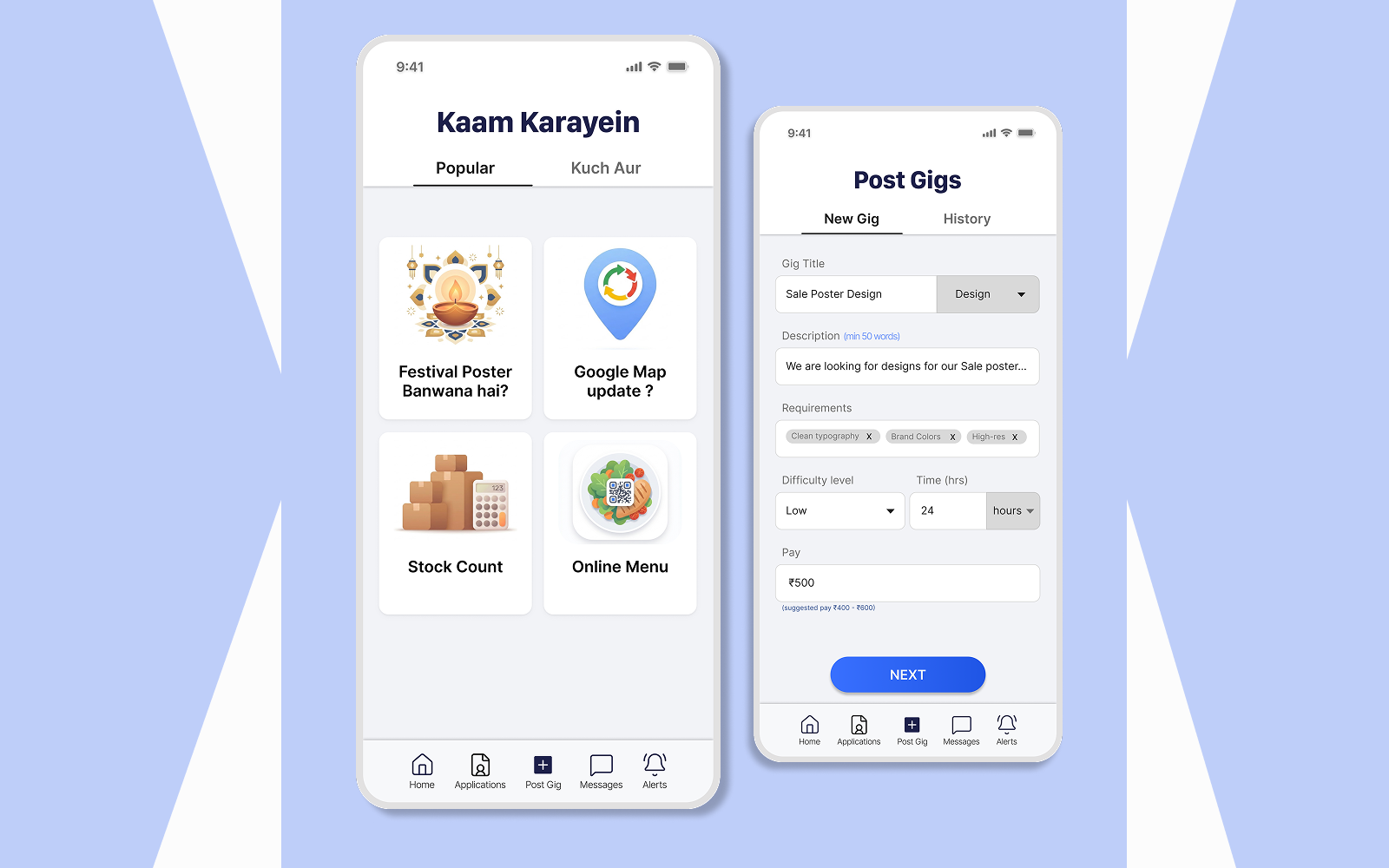
Business owners from Gen X are not comfortable typing in English, so posting a gig was already a friction point before they even started. I designed a separate screen with popular gig templates in Hinglish - "Festival Poster Banwana hai?", "Google Map update?" - so the most common tasks are just one tap away.
The price is transparent, fixed, and affordable. No typing, no confusion, no drop-off before they even post.
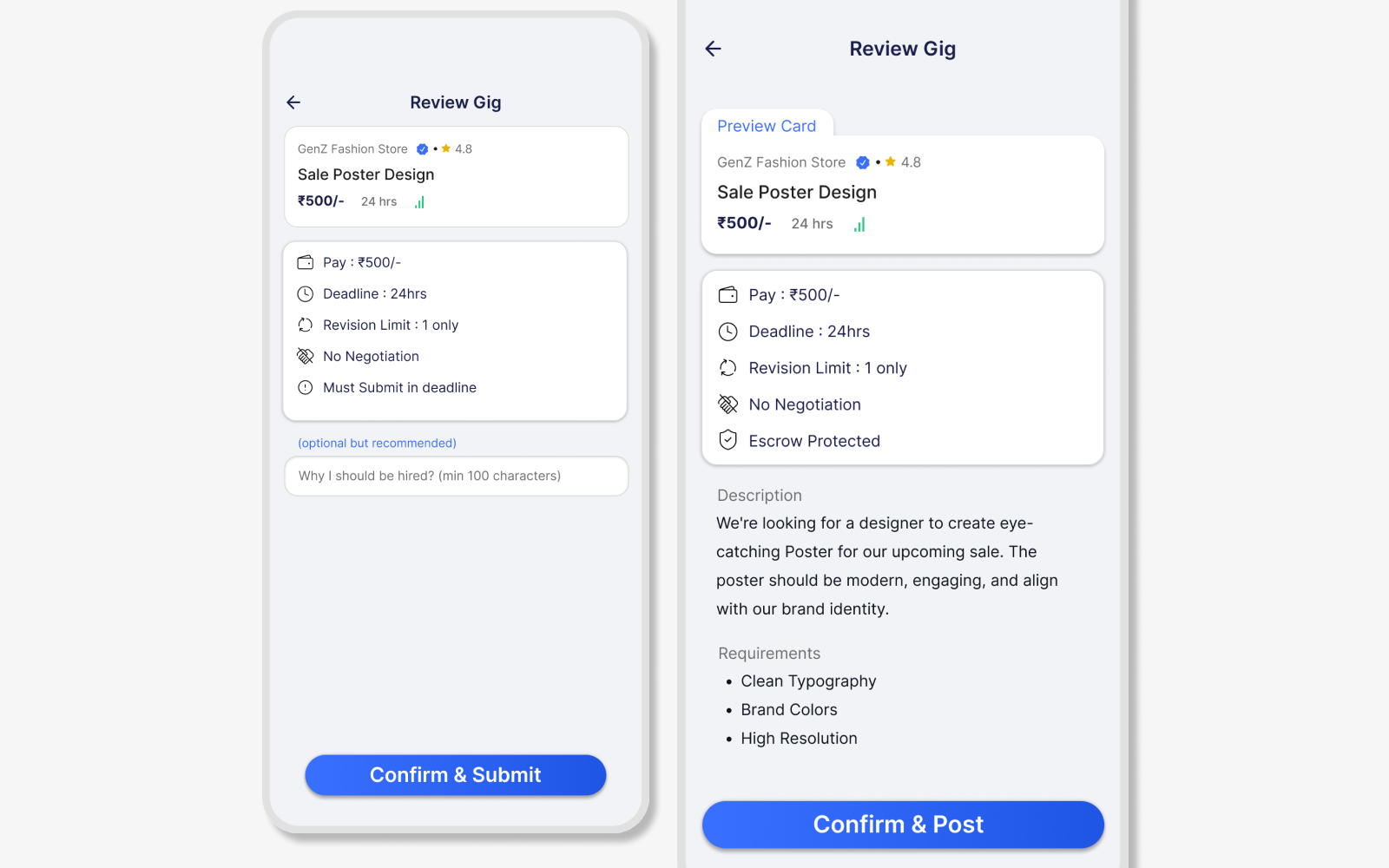
Both users felt overwhelmed at the final commitment step. A review screen was designed for both sides - students see pay, deadline, revision limit, and rules clearly before submitting. Businesses see a preview of their gig before it goes live.
Clear hierarchy, no surprises. This reduced drop-off hesitation and anxiety right before the final tap.
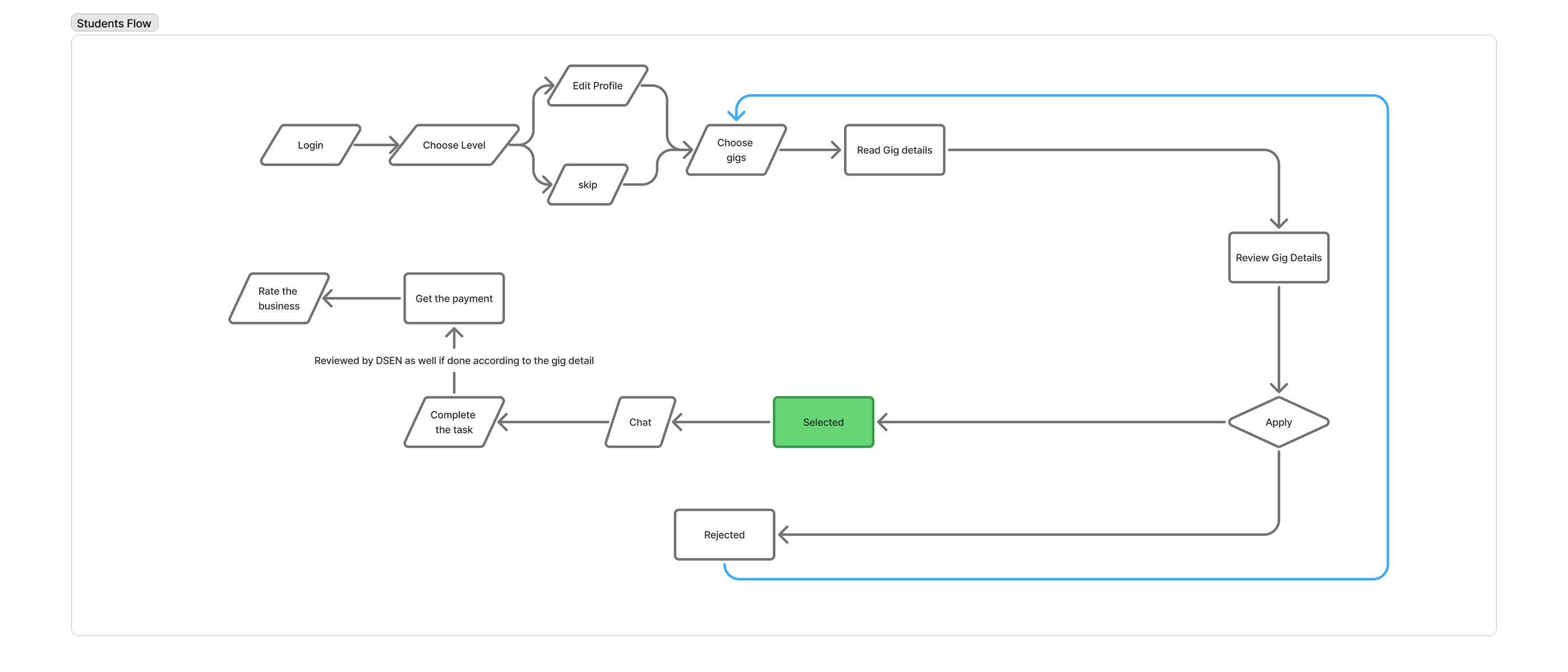
Students felt anxious after applying - constantly wondering if they'd been selected or ignored. A transparent tracking system (Under Review → Shortlisted → Selected) was designed so students always know where they stand without overthinking.
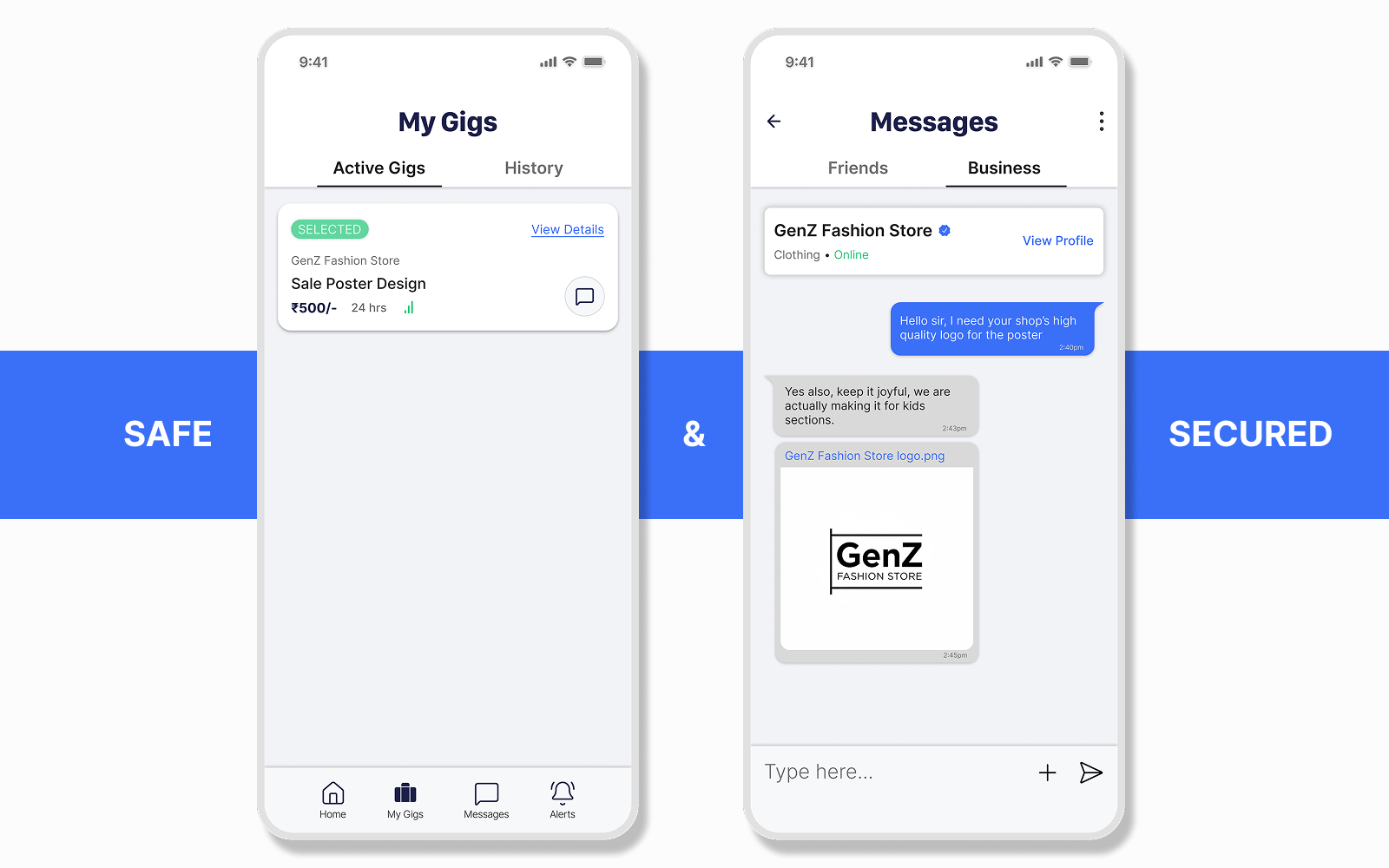
Chat only opens once a student is selected. This eliminates spam, protects both parties, and keeps students focused on academics rather than constantly checking for updates.
User Flow
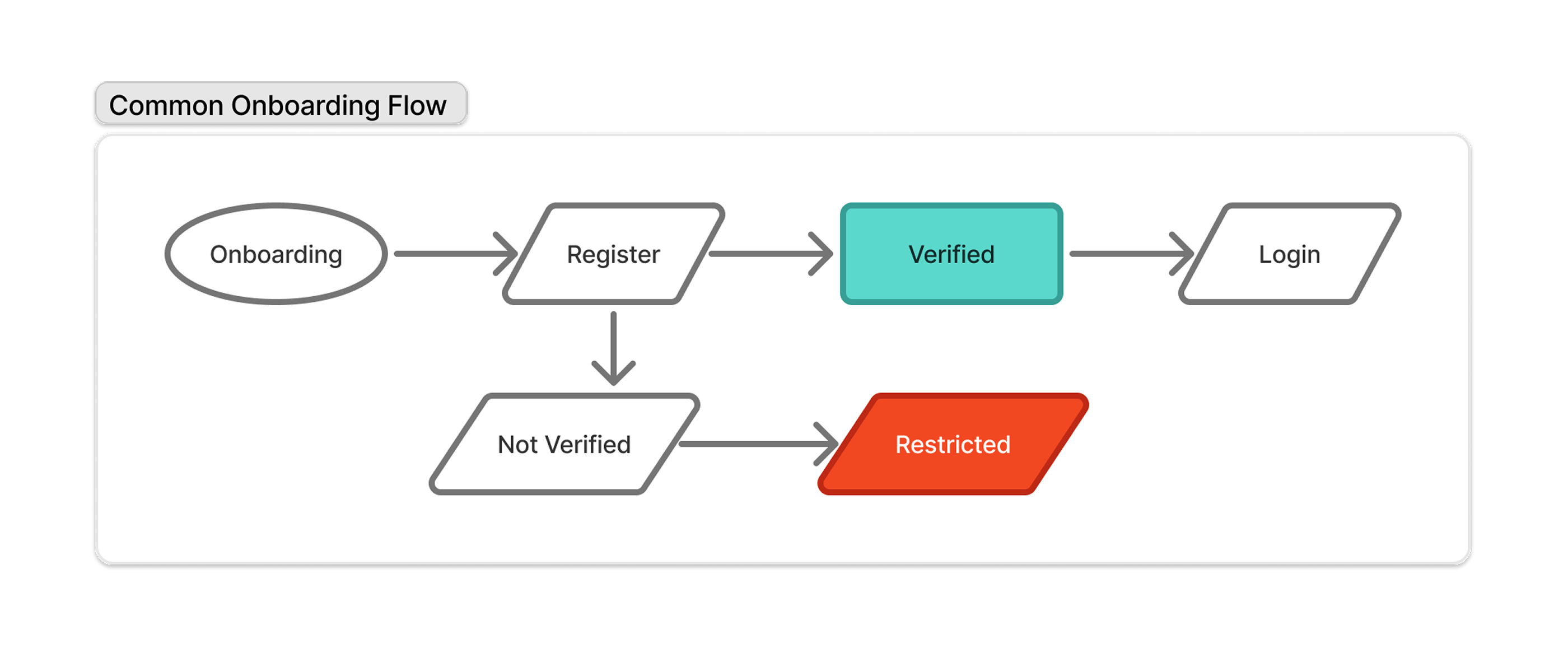
DSEN has three flows - a common onboarding flow for both user types, a student flow from browsing to getting paid, and a business flow from posting a gig to approving payment.
Conclusion
Closing
DSEN was built in 3 days for a startup competition, but the problem it solves is real and ongoing. The biggest learning was that complexity should always sit on the builder's side - the simpler the experience for the user, the harder the design work behind it. Next steps include user testing with real students and local business owners, validating the escrow trust model, and refining the gig template library based on actual demand.
← Back to all projects